Ancestral Roofs

"In Praise of Older Buildings"

Sunday, October 13, 2013

Old Buildings make New News


At the end of September,  I read a CBC News report of the destruction by fire of a 100-year old building on historic Montague Street on Lunenburg Nova Scotia's UNESCO World Heritage waterfront.

a fine handbuilt craft

an appreciative Denis
Just thinking of Lunenburg and its astonishing collection of early frame houses and businesses, made me cringe at the loss. And it took me back to our marathon walkabout of that fine historic town, which ended in an equally fine beverage and  dinner in a fine, old atmospheric pub near the waterfront.

Fishermen's Memorial, Lunenburg


This image in black granite is part of the Fishermen's Memorial in Lunenburg. This 360 degree image captures the place much better - brings a lump into my throat even now. Powerful stuff.


From the photos in this news  report I am worried that the fire might have been at the massive red building behind this canoodling couple in one of the 100 or so photos I took that day.

I believe from the 360Cities images that this is the Adams & Knickle Building, which I read in another report, was not the building lost in the fire. Sure hope not. How do you rebuild a 100 year old building?


Boomtown

Federal Post Office 1897
Despite the slight tendency to conjure up Hollywood back lots with their sets for Main Street movie showdowns in old western towns, these false fronts are real.

More commonly called "boomtown fronts", buildings of this particular style are common in the west, and are usually associated with the first stage of civic development between the 1870's and 1915.


The effect of placing a higher more decorated front against the plain gable end of a commercial building emulates larger more sophisticated commercial centres, and gives a bit of dignity and beauty to plain wind-scoured lumber.

Federal Post Office in profile - the back story

Midnight News (left) c.1890


The message is stability and prosperity, with the added advantage of providing space for extravagant signage touting one's wares. All of these fine examples are from Fort McLeod, Alberta, a small town which early on realized the value of its early c.20 architecture, and created an outstanding walking tour, complete with all the interpretive signage an old house nut could wish.

This is all in addition to the town's major draw, the replica Fort McLeod museum, headquarters of the North West Mounted Police after their arrival in the lawless west in 1874. A great little town, Fort McLeod.

Letting Go...or Home is Where the Heart Is

the family farm home, prettified by later owners
Not long ago, I noticed a for sale announcement in a local magazine. The property in question was the family farm. For sale again, the most recent shift in a series of changes of ownership since our dad reluctantly sold the five-generation farm in 1970.

It made me think of a delightful man I recently interviewed, two days before the sale of his farm, a rare 1830's Scottish stone mill and adjacent house. Allan was  letting go of his beloved Fogorig, to younger folk who can carry the restoration vision further.


Centre Street Picton, where Dad applied 28 gallons of paint
It's what you do.

It's what our Mom and Dad did, after that first sale. In subsequent decades they bought, improved or built, and sold, a number of homes and gardens - always ensuring there would be trees and  yard work for Dad. The homes became smaller and easier to care for, then eventually home became an apartment (granted even then Dad quickly became the resident custodian and yardman.)

King Street Picton, with apartments for my brother
 and for the paternal grandparents


Recently, I had a few hours on a sunny day in Picton, while I waiting for a dear friend having a medical procedure. Had a visit round to all the homes.


Today I'm thinking of all the Thanksgivings we spent together in each of them. The size, the heritage value, the neighbourhood - nothing mattered but that they were home. And we were together making memories, keeping family.

"the house that Ralph built", Glenora Road
because every man should build a house, once
the Bridge Street bungalow purchased while Mom and Dad
were visiting with us in B.C.

Morris Yarrow's fine new apartment building, c.1990


Thursday, September 26, 2013

Sorry


Kaslo is one of our favourite places in B.C., one of many memories for Denis from before we met, and many more that we created over the years we revisited Kootenay Lake following its silver-mining story and exploring its wild rugged beauty.


blame the tilt on the photographer, not the structure


Last month we returned after five years away, to find Kaslo looking quite splendid, a determined and visionary town capitalizing on its fine architectural legacy, and its important history, to draw tourism and revenue.

The town's flagship (truly a ship in this case) is the legendary S.S. Moyie which transported people and goods up and down the lake into the 1950's, preserved through great local effort, now a National Historic Site. The Moyie is the oldest intact stern-wheeler on the planet.

It was great to see the old Langham Hotel, which was built in 1893 for the hoards of silver miners sleeping in shifts in the heyday of the mining boom, looking so fine. The ambitious frame hotel, once abandoned, had functioned over the years as a bank and a wooden boat factory, among other reincarnations. The ruined structure was narrowly rescued from demolition not long ago by determined citizens, and stands today, proud in its Victorian finery, as the award-winning Langham Cultural Centre, housing a gallery, museum and office spaces. The history of the building's almost unbelievable rescue is told here.

During WWII, the Langham housed 80 Japanese internees:  a small part of the 1100 proud and resilient Canadian citizens from coastal B.C. who were transported to Sandon. They, along with thousands of other folks of Japanese origin were deemed enemy aliens and housed in appalling conditions in many then-desperately remote areas of the interior.

It's a powerful display, telling a forgotten chapter in our not so proud story of wartime fear, ignorance and prejudice.

 In a curious coincidence, the other night I came upon this superb TVO documentary  by Mitch Miyagawa, about the internment and other injustices in Canada's history, and the awkward attempts to redress past mistakes. The film-maker's father (like David Suzuki's) was wrongly interned as an enemy alien during the war.
Geigerich Building 1894 - internee's school
To read more about Kaslo follow this link to B.C. Magazine:  magazine.
boomtown fronts
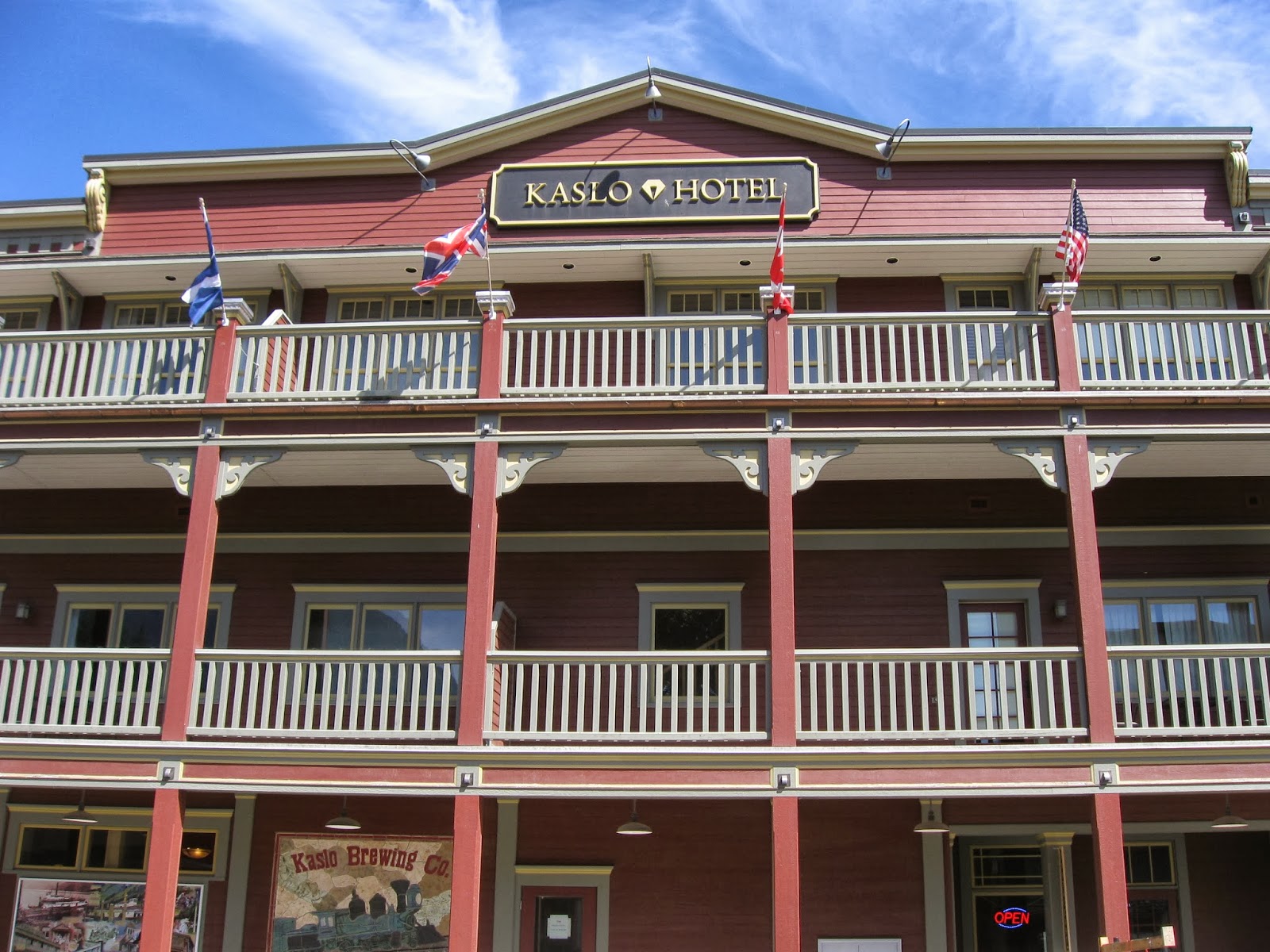
The Kaslo Hotel (1896)- demolished 1951
Recreated in 1955/2009
Enjoy a Kaslo Walking Tour!
Kaslo City Hall 1898

The Scotsmen of Brighton Township


 Northumberland County. Sun and brisk air, winding roads that climb and swoop, green and pleasant farms and woodlands turning to fall colour. What a way to spend a day. And yesterday I did, in the company of a woman who knows her township and her history. A woman of Scots heritage, who delighted me with tales of the local folk, and sightings of well-crafted stone houses of the settlement in Brighton and next-door Seymour townships.
Fogorig mill


I plan to return soon - history is everywhere in the Northumberland hills. People with deep roots in the old country transplanted them here, made buildings to last, and history to tell. A good place to look back, and see forward.

"Don't judge each day by the harvest you reap, but by the seeds you sow." Robert Louis Stevenson.


Menie

Sunday, September 22, 2013

Genteel poverty

At the corner of Hastings and Cambie Streets, across from that
city's infamous Victory Square, and an intersection away from the human misery that is East Hastings, stands Vancouver's absolutely extravagant Beaux Arts Dominion Building (1910).

Many resources tell its story better than I can (being still a bit inarticulate after 6 weeks of travelling, entirely in input mode).

The Vancouver walking tour guides available in PDF from the Vancouver Heritage Foundation and a June 2013 Inside Vancouver article by Miranda Post both do the Dominion Building proud. For now, I just want to recall that sunny early September day I actually made its acquaintance (after years of living in Vancouver, and walking or bussing past it on my trips to Chinatown, or to work in Burnaby) and just stand and look at this most lavish and colourful of Vancouver buildings.


should be a snooty hansom cab, not a democratic bike

those Beaux Arts folk really knew how to decorate surfaces!

the symbolism of muscular cherubs around your cartouche?

Wednesday, September 18, 2013

Hope Springs Eternal

Good Hope Hall, near Melville, Sask.
 We've just returned from six weeks of driving and camping across the face of our astonishingly diverse country. Over the winter I will endeavour to process what I have learned from all the museum visits, the walking tours, the mountain hikes and canyon explorations, the dusty backroads and open countryside, all the moments of standing in awe ....and of course, the buildings.


And, if I still remember how to write, I will try to share them.


I love the prairies. Of course, our country is huge - the width of rivers, the expanse of lakes, the height of virgin forest trees and of mountains. But for me, the limitless horizons of the prairies, dwarfing us and our illusions, best convey the vastness.

In face of this, settlers created homes, farms, communities in the late c.19 and early c.20.


across the road, canola stretching to the horizon

We saw so many picturesque early farmhouses,  barns, and outbuildings,  returning, dignified, back into the land. But opportunity to capture most of these on camera were hampered by lack of opportunity - traffic, distance, fences, light and lack thereof, rain. I will hold these images in my head forever, but they are somewhat difficult to share with others.

This weathered and abandoned little community hall, standing at a cross-roads on municipal road 13 east of Melville Saskatchewan, can ably stand in for them all. This is the Good Hope Community hall. Looks to have been built around 1910/20.I expect at one time it was the centre of a striving farming community, likely composed of optimistic immigrants from Europe, plowing the virgin prairie, starting farms and ranches, always looking forward to better yields, better houses, a better future for their families. Hopeful.